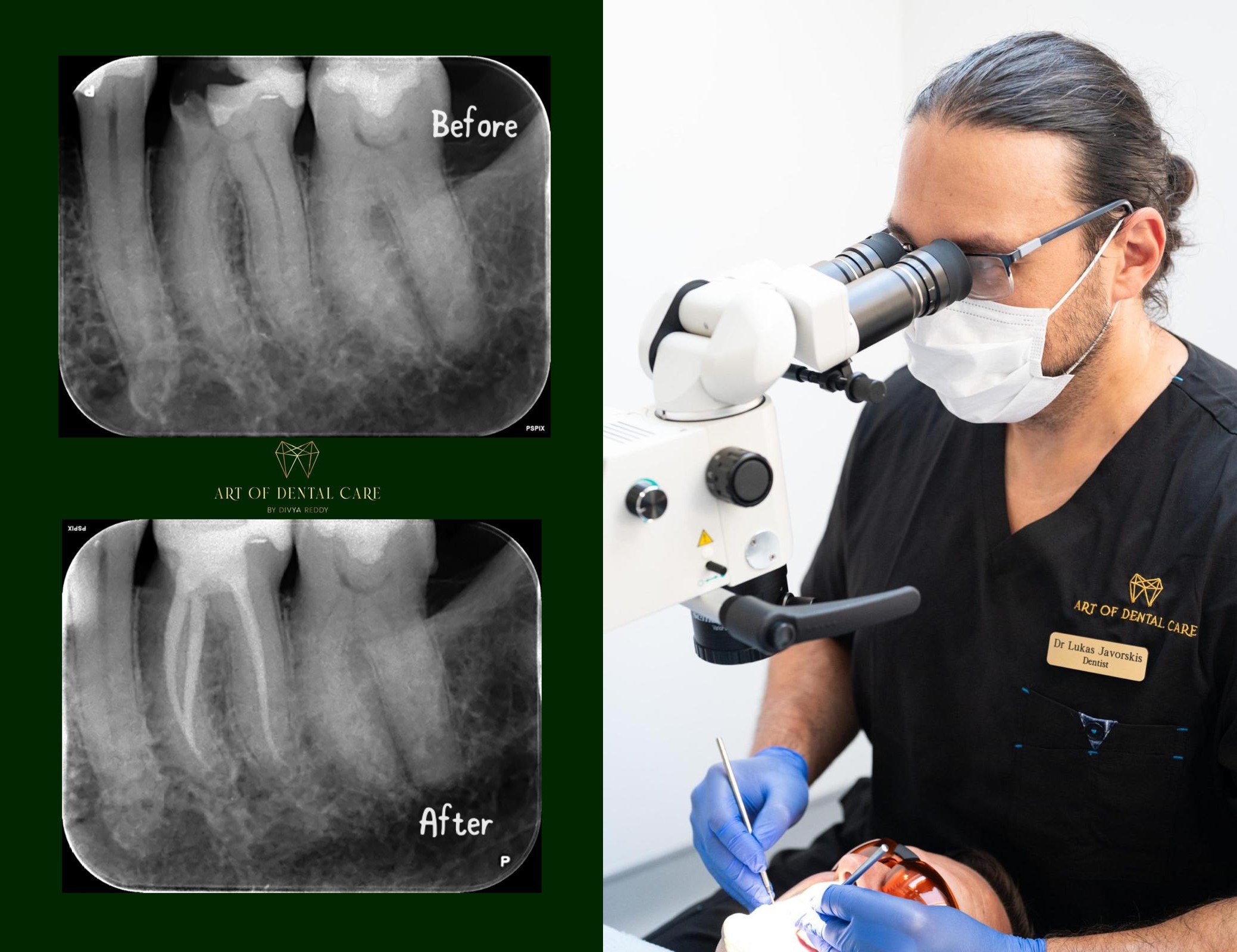
Can My Tooth Be Saved? How a Microscope Helps with Root Canal Treatment
Does toothache wake you at night, or does your tooth hurt when you bite? When a tooth already has a large filling or crown, it is natural to wonder: can it still be saved?
Root canal treatment may help preserve your natural tooth. At Art of Dental Care in Chester, Dr Lukas Javorskis uses a dental microscope in most cases to examine the fine details inside teeth more clearly. But what difference can it make?
Why Might I Need Root Canal Treatment?
Inside your tooth is the pulp, soft tissue containing nerves and blood vessels. Deep decay, a large or deep filling, a crack or an injury can cause it to become inflamed or infected.
Root canal treatment removes the affected tissue. The canals are cleaned, disinfected, filled and sealed. Later, the rest of the tooth structure is covered by an onlay, crown or a filling. In root canal therapy, we try to clear out the infection and inflammation to save the tooth for later reconstruction.
How Does a Dental Microscope Help?
Root canal openings can be tiny, hidden or narrowed over time, making them difficult to find with the naked eye.
A dental operating microscope combines magnification with focused lighting, helping the dentist:
- Locate difficult-to-see canal openings.
- Examine visible cracks and fine details.
- Preserve tooth structure by avoiding unnecessary removal.
- Help manage existing root filling materials or certain obstructions during retreatment.
A microscope cannot see through a tooth or replace dental X-rays. It improves the view of areas the dentist can directly examine.
Does Microscope-Assisted Root Canal Treatment Improve Success Rates?
Better visibility is definitely one of the benefits of using a dental microscope, particularly with complex treatments like dealing with canals. That being said, using a microscope does not guarantee the success of a routine root canal, or the increase of success rate for that matter. There are many factors involved, like the condition of the tooth and the root, the quality of cleaning and sealing, and the final restoration. Unfortunately, some teeth have extensive damage, including unfavorable cracks, and they can’t be saved. Your dentist will explain the findings, likely outcome, limitations and alternatives so you can make an informed decision.
Does Root Canal Treatment Hurt?
Feeling apprehensive is understandable, especially when you are already in pain.
Treatment is usually carried out under local anaesthetic, and most patients can be treated comfortably. You might feel a little pressure or vibration.
Should you feel any pain, tell your dentist so they can stop what they’re doing. The soft tissues around your tooth might be a little tender after the treatment as they heal. Your dentist will tell you what will happen and let you know if you need to come back for any reason.
Can a Previously Treated Tooth Be Saved?
Sometimes additional root canal treatment is necessary after an earlier root canal has been performed.
Pain, swelling or recurrent infection warrant further investigation to establish the cause. This could lead to retreatment of the root canal, root end surgery (an apicectomy) or removal of the tooth.
Microscopes help the dentist visualize root canal anatomy and also assist with removal of existing root canal filling materials during retreatment. Retreatment of root canals may be suitable depending on the nature of the issue and the amount of healthy tooth tissue.
What Happens at Art of Dental Care in Chester?
Dr Lukas Javorskis has a special interest in endodontics and provides root canal treatment, including complex cases and retreatment. He uses a dental microscope in most cases to help examine the intricate anatomy inside teeth.
During the assessment, your dentist examines the tooth clinically and uses radiographs as needed. We will determine if root canal treatment is an appropriate choice and will explain the predicted outcome and the expected restoration of the tooth.
During the procedure, your dentist will place a protective rubber dam to prevent the canals from getting contaminated with saliva. Your canals are shaped and disinfected with sterile root canal files. Your dentist then fills the canals with an biocompatible canal filling. Depending on the complexity of your root canal treatment, you might need a couple of visits.
Why Does the Final Restoration Matter?
A suitable restoration helps seal the tooth and protect its remaining structure. Your dentist may recommend a filling, onlay or crown, depending on the tooth’s condition and how much healthy structure remains.
Regular reviews and ongoing dental care also help maintain the tooth’s function over time.
Find Out Whether Your Tooth Can Be Saved
You do not have to make this decision alone. If you have persistent toothache, discomfort when biting, swelling or concerns about a previous root canal, an assessment can help you understand the problem and your options.
Contact Art of Dental Care in Chester through our Contact Us page to arrange an appointment or find out more about microscope-assisted root canal treatment.
Alternatively, call 01244 848421 or visit us at 1 Canal Street, Chester.