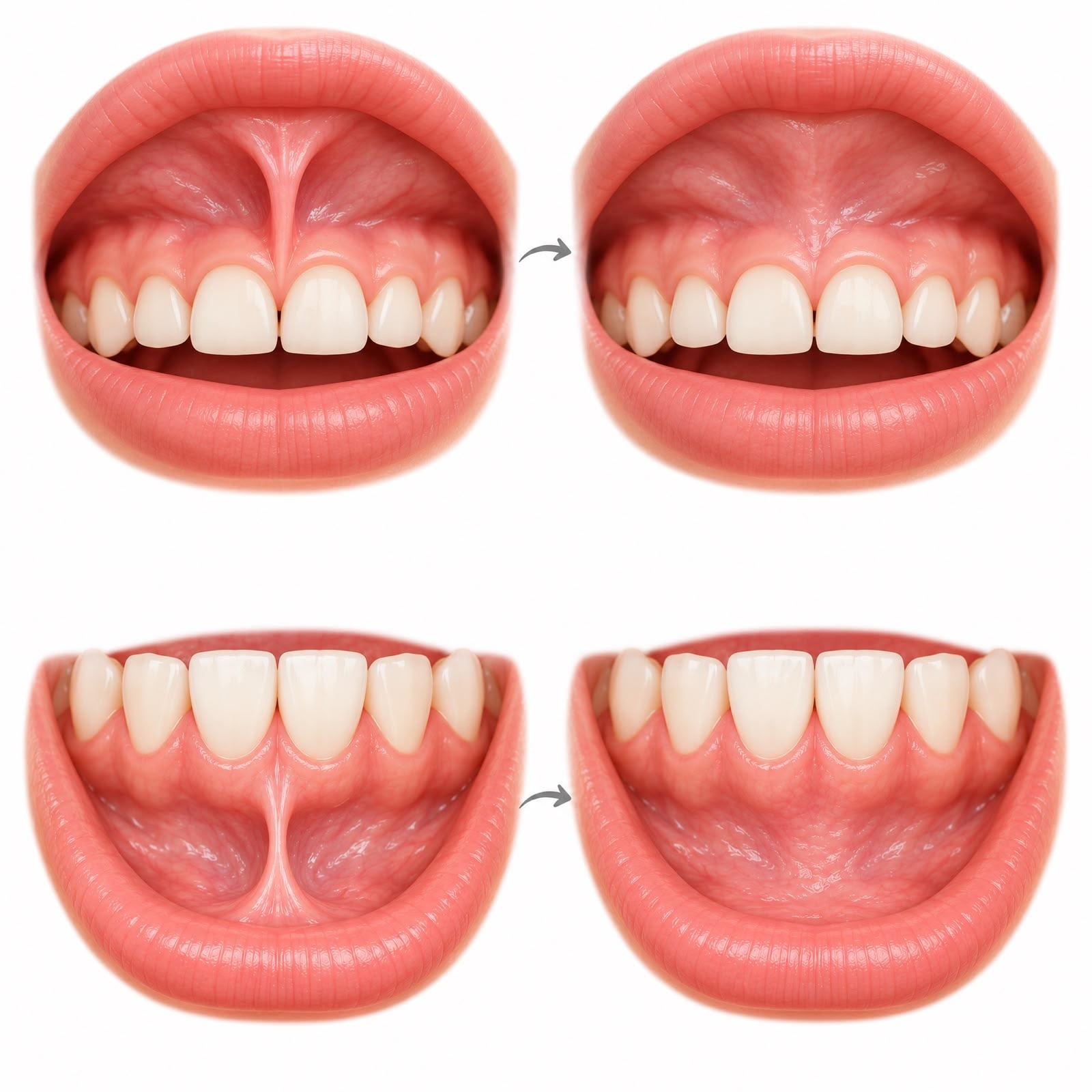
Frenectomy Explained: What Is It, Who Needs It and What to Expect?
Understanding tongue-tie and lip-tie treatment at Art of Dental Care, Chester.
Have you noticed a small band of tissue beneath your tongue or connecting your upper lip to your gums? Usually, these tissues cause no problems. However, if a frenulum restricts movement or affects oral health, a procedure called a frenectomy may be considered.
At Art of Dental Care in Chester, we believe understanding your treatment options is an important part of making informed decisions. Here are the basics of frenectomy, including its candidates and the process of recovery.
What is a Frenectomy?
A frenectomy is a surgical procedure to remove all or part of a frenum, the fold of tissue connecting the lip and tongue to the gums. Some other variations of frenectomy are frenotomy and frenuloplasty, which both alter or shift the position of a frenum to serve a particular function.
When Might You Need a Frenectomy?
Some frenums that appear thick or prominent do not require removal or modification, and you may find that this is true for yours. Your surgeon will need to assess the case and provide you with a recommendation as to whether or not to proceed.
When your tongue cannot move freely as it should, you may have ankyloglossia. Ankyloglossia is the medical term for a tongue tie. While tongue ties may contribute to some of the issues associated with breast feeding in infants, it may not be the sole cause of these issues, and it is imperative that your child is assessed for other breastfeeding challenges. If your child is struggling, the surgical option may be right for them. When your tongue is restricted, the tissue can impact your gums.
For children, having prominent gum tissue can also cause issues with gum hygiene and the development of some gum conditions. It’s also common for children to develop prominent gum tissue, but it is typically not the reason for removal.
A gap between the front teeth: A prominent upper lip frenulum may contribute to a gap, known as a diastema. Frenectomy may form part of an orthodontic treatment plan, but many gaps in children close naturally. If you decide to undergo orthodontic treatment, it is important to take the timing of the treatment into consideration
What Happens During a Frenectomy?
Prior to treatment, your doctor will examine the frenulum. He or she will look to see if the frenulum has caused tongue movement issues or other health issues. Your doctor will then talk with you to help you weigh the risks, benefits, and options available to you, and make a decision to undergo frenectomy.
For adults and older children, frenectomy generally includes local anaesthetic to numb the area, followed by surgical correction and repositioning of the frenum. It may be necessary for your surgeon to place stitches depending on the surgical technique used. Lasers, electrosurgery and other surgical instruments may also be utilized to help you, as each case varies.
In most cases, the procedure is quite short. The length of the procedure depends on how complicated it is for your surgeon.
Is Frenectomy Painful?
As with other procedures, local anesthesia helps reduce discomfort. Following surgery, mild swelling or tenderness is common, and pain medication, along with proper aftercare, can help to reduce it.
As with all surgical procedures, there is a risk of infection, bleeding, scarring, and injury to surrounding tissues, and in some cases the reason for surgery might return.
What Is Recovery Like?
Healing generally takes several days to a few weeks, depending on the procedure. You may experience mild swelling and tenderness, difficulty eating temporarily, or a whitish or yellowish film of healing tissues over the wound.
Following surgery, continue to brush and floss your teeth to keep your mouth clean. Avoid hard and chewy foods for a few days to protect the surgical area, and do your best to avoid any activities that could cause further trauma to the site. Contact us if you notice bleeding, worsening swelling, or if you begin to run a fever.
Does a Frenectomy Improve Oral Function?
Though restrictive frenulums can limit the movement of the tongue, results of surgery aren’t guaranteed. Children who continue to have problems with speech should still consider further assessments or even more speech therapy. Frenectomy also does not replace orthodontic treatment when tooth movement is required.
Treatment may be considered at different ages, depending on feeding difficulties, functional restrictions, gum concerns or wider dental needs. The decision should always be based on individual assessment, not appearance alone.
Frenectomy in Chester: How Can We Help?
At Art of Dental Care, Chester, we provide oral surgery services and help patients understand their treatment options. If you are concerned about a tongue-tie, lip attachment or restricted frenulum, our team can help you enquire about a suitable assessment.
Contact Art of Dental Care to discuss your concerns and explore the most appropriate next step. The aim is to address a genuine problem with treatment tailored to your individual needs.